Shifting from Harm to Harmony

Keeping the Peace: Team Tensions During the Holiday Season

The holidays are marketed as a season of joy, but in workplaces, they can also be a season of team tension.

From end-of-year deadlines and budget pressures to clashing expectations around time off, gifting, and celebration, the last two months of the year often bring unspoken stress to the surface. Add with the broad array of cultural and religious holiday observances and increased travel, and it’s no wonder teams report spikes in burnout, interpersonal friction, and miscommunication.

Rather than ignore this complex season, leaders and teams can proactively create systems and processes that help everyone move through the holidays with clarity, care, and calm.

Why Team Tension Increases Around the Holidays

The holiday season tends to magnify existing stressors. Here’s why:

  • Time pressure: End-of-year deliverables and performance reviews pile up.
  • Emotional complexity: Grief, loneliness, or family stress can be heightened.
  • Cultural exclusion: Not all employees celebrate the same holidays, or celebrate at all.
  • Unspoken expectations: Norms around gifting, socializing, or “holiday spirit” can feel unclear or even forced.
  • Work-life conflict: Caregivers and parents often juggle school breaks, travel, and time overwhelm.

Research from the American Psychological Association (APA) shows that 38% of people experience increased stress during the holidays, with work responsibilities being a major contributing factor (APA, 2023).

In teams, that stress often plays out as:

  • Avoidance or withdrawal
  • Short tempers
  • Misread communication
  • Resentment over flexibility or perceived favoritism

How Leaders Can Reduce Holiday Tensions

Rather than wait for team tension to bubble up, leaders can take proactive steps to prevent unnecessary conflict and promote a care-based culture.

  1. Normalize Holiday Stress

Start the conversation. Acknowledge that this time of year can be joyful and heavy, and that both realities are welcome. This kind of emotional permission lowers pressure and builds psychological safety.

  1. Clarify Expectations, Early and Often

Set clear guidelines around:

  • Time off and availability
  • Gifting expectations (or absence of them)
  • Meeting cadences
  • End-of-year goals

When expectations are ambiguous, people tend to fill in assumptions both of fact and intent, which then easily and readily turns into conflict. Clarity reduces unnecessary confusion that leads to stress and interpersonal team tension.

  1. Invite, Don’t Assume Participation

Not everyone celebrates Christmas. Some don’t celebrate any holidays at all. Make year-end festivities opt-in and inclusive, and offer alternatives that resonate with varying beliefs and family systems.

Instead of a mandatory Secret Santa, consider optional gratitude circles, reflection rituals, or culture potlucks.

  1. Make “Temperature” Check-Ins Part of Team Rituals

Start meetings with brief check-ins like: “What’s one word to describe how you’re feeling this week?” Normalize that people are managing more than what’s on the agenda.

Not only do these micro-moments help surface unspoken team tension early, before they turn into conflict, but they also shine the light on areas of weakness that other team members and leaders may not have realized are going unnoticed.

  1. Be Mindful of Holiday Time-off Unfairnesses

If certain teams are expected to work through holiday periods (like customer service), ensure they are compensated fairly, acknowledged meaningfully, and rotated intentionally across years. Fairness is a key component of conflict prevention.

What Teams Can Do Together

It’s not just leaders who shape the tone of the holidays. Teams can collectively:

  • Practice positive frameworks: Assume good intent and ask before judging behavior.
  • Take initiative: Offer help to colleagues juggling caregiving or travel.
  • Communicate boundaries: Respect “offline” hours and avoid overloading calendars.
  • Make space for each other’s traditions: Learn, share, and invite curiosity without pressure.

Conflict Prevention During a Tender Time

The holidays may be “the most wonderful time of the year,” but in workplaces, they’re also one of the most emotionally loaded.

Rather than avoid the complexity, what if we leaned into it with honesty, care, and clear communication?

At Harmony Strategies, we view the holiday season as a time with plentiful opportunity to strengthen cultural intelligence, deepen team resilience, and reinforce team communication and collective well-being. 

Check out the various services and solutions we offer to create and support team resilience and amazing workplace culture.


References and Resources

APA 2023 Holiday Stress Survey

TED Talk by Brené Brown: The Power of Vulnerability

Priya Parker – The Art of Gathering


Facebook
Twitter
LinkedIn
Email
Pinterest

How Can We Help You Today?

How can we help you today?

Subscribe to Our Newsletter

Get quick tips, thoughts to ponder, links to our upcoming courses, and more!

Free Consultation

Drop us a line for a FREE 15 minute consultation to help you handle your conflict or challenge!

Fill out the form below for a copy of our White Paper on:

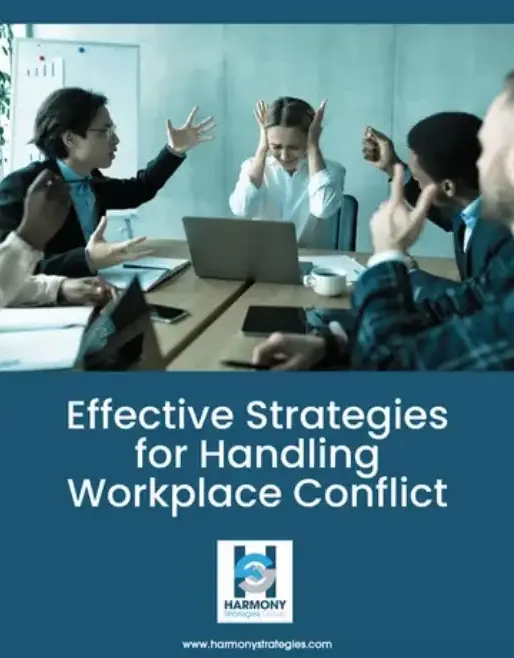
Effective Strategies For Handling Workplace Conflict

Melody Wang

Melody Wang is a Conflict Consultant with the Harmony Strategies Group and CEO of Wang Mediation, which she founded upon graduation from the University of Southern California, Gould School of Law with an MA in Alternative Dispute Resolution. Melody is a panel mediator for the New York City Family Court and serves on the Board of Directors at the Association for Conflict Resolution, Greater New York (ACR-GNY). Prior to moving to New York, Melody was an experienced civil and community mediator in Los Angeles, California, working closely with non-profits, small claim courts and the California federal court. She also led selected trainings and workshops on dispute resolution within the Asian-American community in California.  Melody has lived in the U.S., Taiwan, China and Singapore, is fluent in English, Mandarin Chinese and Taiwanese, and especially enjoys engaging in international relations and cross-cultural conflict systems.

Dara Rossi

Dara Rossi, Ph.D. is a Conflict & Strategy Consultant with the Harmony Strategies Group. She has more than 20 years of experience in the field of education and has worked with students from kindergarten through the university graduate level. Additionally, she has facilitated professional development for educators and administrators across all points on the education continuum. After10 years of service in the Department of Teaching and Learning Southern Methodist University, she launched her coaching and consulting business while continuing to serve as an adjunct professor. She holds a PhD in Curriculum and Instruction, an MBA, an MA in Dispute Resolution, and an MAT in Education, and BS in Human Development.

Isar Mahanian

Isar Mahanian, M.Sc. is a Conflict & Strategy Consultant with the Harmony Strategies Group. She is an active mediator who coaches new mediators in the program in which she serves. Isar has worked at a fast-paced technology start-up as the Head of Human Resources, leading senior executives to mitigate and resolve workplace conflicts and creating system level improvements for employees within the company. She holds a Master’s of Science degree in Negotiation and Conflict Resolution from Columbia University. 

Kimberly Jackson Davidson

Kimberly Jackson Davidson is currently the University Ombudsperson at George Mason University and member of the Harmony Strategies Group. She spent two decades at Oberlin College in Ohio, holding positions in the Office of the Dean of Students and as Visiting Lecturer in African American Studies. During her final five and a half years there, she served all campus constituencies as Ombudsperson and Director of the Yeworkwha Belachew Center for Dialogue (YBCD). Davidson is active within the International Ombuds Association (IOA), the California Caucus of College and University Ombuds (CCCUO), and the Ombuds Section of the Association for Conflict Resolution (ACR). She earned a B.A. in English Literature from Spelman College in 1986 and an M.A. from the University of Wisconsin-Madison in African Literature in 1991.

Hector Escalante

Hector Escalante is an experienced Ombuds and learning and development professional with over seven years of ombuds experience and over twenty years of experience developing and teaching course offerings which promote inclusion, healthy communication, and conflict resolution. He is the Director of the Ombuds Office at the University of California, Merced, having served many years as the organizational ombuds at the University of the Pacific. He is an ombuds partner with Harmony Strategies Group, and a consulting ombuds for Earthjustice and Union of Concerned Scientists.  Hector holds two master’s degrees and a doctorate in education. He is a United States Marine Corps veteran, a husband and father to four children. Hector’s passions include treating all with fairness, equity, dignity, and compassion and good food. 

Stuart Baker

Stuart Baker is a Conflict and Strategy Consultant with the Harmony Strategies Group. He combines decades of professional experience in the construction industry as a general contractor and carpenter and blends his project management with mediation, facilitation and workshop presentations on dispute resolution. Based on his unique combination of skills and expertise, Stuart authored the book Conscious Cooperation, a practical guide on strategic planning and negotiation for the construction and homebuilding communities. Stuart brings a broad sensitivity to his consulting work and has mediated disputes large and small – from international corporate disputes to family conflicts. Likewise, Stuart coaches and consults individuals facing business, community, religious, or family challenges. He enjoys helping people overcome obstacles and deepen their harmony and connection with others.
 

Kira Nurieli

Kira Nurieli is the CEO of the Harmony Strategies Group and is an expert mediator, conflict coach, trainer/facilitator, consultant, and restorative practices facilitator. She has spent upwards of twenty years helping clients handle conflict and improve communication strategies and has presented at numerous conferences and symposia as a subject matter expert. She holds a Master’s degree in Organizational Psychology from Columbia University and a Bachelor’s degree in Comparative Performance from Barnard College. She especially enjoys helping individuals, teams, and lay-leaders become more impactful and empowered in their work and is honored to work alongside her esteemed colleagues with the Harmony Strategies Group.

Book Now

Glad to help you out – please fill in the form below, so we can get started!

Contact Us

Drop us a line for a FREE 15 minute consultation to help you handle your conflict or challenge!

Book a Workshop

Glad to help you out – please fill in the form below, so we can get started!