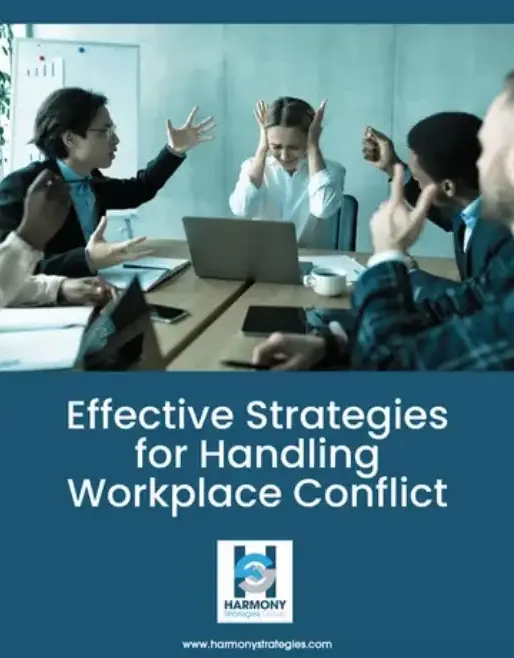
How does your company
mitigate Workplace Conflict Risk?
Top 5 indicators of Workplace Conflict Risk:
- Poor communication within or between departments or individuals.
- Sudden or extreme changes.
- Lack of management or leadership skills.
- Unclear or unpopular policies or processes.
- High levels of workplace incivility and disrespect.
Poor communication within or between departments or individuals
Sudden or extreme changes
Courts & Justice Systems
religious and spiritual centers
Non-Profits
We provide Workplace Conflict Risk assessments and solutions.
Although effective talent is vital for business success, there are inherent risks that Workplace Conflict poses, due to the unpredictable nature of our interactions. Teams can be poorly managed, collaboration efforts can fail, and disputes can go unaddressed and escalate into full-blown toxicity. These dynamics adversely impact an organization’s ability to achieve its objectives, goals, and mission. They put a corporation at risk for high turnover and inefficiency, leading to poor financial health and low morale. Conflicts that fester compromise a corporation’s reputation, operations, compliance with regulations, and overall sustainability.
Workplace Conflict Risk manifests in a variety of ways and compromises your business. Our team of experts can help.
We identify and address:
Social Risks
Risks associated with workplace dynamics, social issues, or corporate social responsibility concerns, such as community relations, employee welfare, or sustainability practices.
Reputational Risks
Risks stemming from negative perceptions, public scrutiny, or stakeholder dissatisfaction, which may tarnish the organization’s reputation, erode trust, and lead to loss of customers, investors, or partners.
Operational Risks
Risks arising from internal processes, systems, or procedures that may lead to inefficiencies, errors, failures, or disruptions in day-to-day operations, including supply chain disruptions, equipment failures, or human errors.
Policy Risks
Risks related to poor, weak, or ineffective policies and systems, especially those that define workplace behavior and professional decorum. Conduct policies include definitions of harassment, discrimination, and promotion and feedback systems.
Compliance & Regulatory Risks
Risks related to non-compliance with industry standards, laws, ethical guidelines, policies, and related regulations and government mandates. Failure to follow regulations may lead to legal liabilities, fines, reputational damage, or other related penalties.
Workplace Conflict Risk mitigation includes:
- Identifying and assessing areas of weakness.
- Liaising with senior executives, to determine best courses of action.
- Providing solutions that protect the organization's reputation, improve productivity, and increase team performance.
Effective risk management starts with visionary leaders who are pro-active about tackling the issues early-on.
We have a proven track record for identifying risks before they compromise the larger organizational system.