If you asked ten people in your office what an “Ombuds” is, you’d probably get ten blank stares — maybe an eleventh person would guess it’s some kind of HR title. That confusion is common, and it’s also a missed opportunity. An Ombuds may be one of the most underused resources for building a healthier, more resilient workplace.
So, What Exactly Is an Ombuds?
An Ombuds is a confidential, neutral, and informal resource that employees, leaders, and teams can turn to when conflict, confusion, or tension arises at work. Unlike HR, an Ombuds doesn’t investigate, discipline, or make binding decisions. Instead, they listen, help people think through their options, surface patterns before they escalate, and — when appropriate — facilitate conversations that get people unstuck.
I often tell people that an Ombuds is like your dedicated, at-the-ready resource whenever frictions start to create some heat… and some leaders avoid the heat altogether, by speaking with me privately to plan for a sensitive conversation or to think strategically about the next meeting, the team culture, or whatever change is about to unfold. I’m the person who won’t gossip, won’t tattle, and will help with skills and tools for being strategic and poised.
Think of the Ombuds as a pressure-release valve for an organization.
I’ve encountered many employees who have sat on frustration for months – even years! – because they didn’t know who to talk to, or they’re afraid that raising an issue will trigger a formal process they’re not ready for or are scared and uncertain about. As Ombuds, I offered them a “parallel” path: a safe, off-the-record space to be heard, explore possibilities, and figure out next steps — without anything happening automatically.
While the role is still gaining recognition in corporate America, it’s a common role in place in higher education and government agencies.
I find nonprofit and mission-driven organizations, where trust, culture, and dignity carry real operational weight, are especially interested in the work of an Ombuds to support their mission and ensure they are living their core values.
Why Ombuds Matter More Than Ever
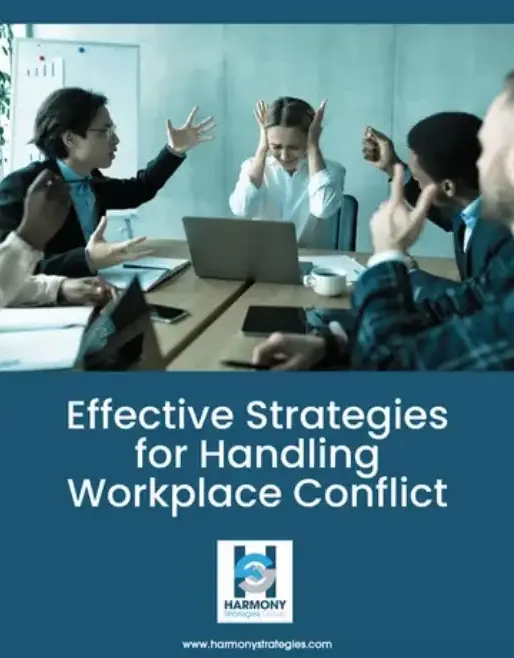
Modern workplaces are dealing with more complexity, more distributed teams, and more high-stakes conversations than ever before. Left unaddressed, everyday friction — a miscommunication between departments, a leader who doesn’t realize how their feedback lands, a team quietly losing trust in each other — compounds into disengagement, turnover, and larger human capital risk.
In my role as organizational Ombuds, I help catch that friction early. Done well, it isn’t just about resolving disputes; it’s about building the underlying conditions — integrity, communication competencies, and listening skills — that let leaders and teams do their best work.
The Team Bringing This to Life: Harmony Strategies Group
If you’re looking for a model of what excellent, modern Ombuds work looks like, my team and I would be delighted to help shed light on how we work. I founded Harmony Strategies to bring together those mediators, organizational psychologists, ICF-certified coaches, and experienced facilitators who specialize in exactly this kind of work: conflict management, executive coaching, restorative practices, and Fractional Ombuds services for mission-driven organizations.
I myself have spent more than two decades working as a mediator, executive and conflict coach, facilitator, and organizational Ombuds. I hold a master’s degree in Organizational Psychology from Columbia University, and have worked with organizations ranging from research institutions and government agencies to nonprofits and foundations. My team has supported clients like Cold Spring Harbor Laboratory, the MacArthur Foundation, and the U.S. Fish & Wildlife Service, among others.
What sets Harmony Strategies apart isn’t just our experience — it’s the framework I’ve built around it.
The 3D Harmony™ Model: Dignity, Dialogue, Discovery
Harmony Strategies Group’s signature approach, 3D Harmony™, is built on three interwoven principles: Dignity, Dialogue, and Discovery.
- Dignity comes first. Before any productive conversation can happen, people need to feel that their inherent worth is recognized — especially in moments where it’s felt compromised. Without this foundation, everything that follows tends to feel hollow.
- Dialogue builds on that foundation, creating space for open, honest communication where people can express their needs and actually be heard — not just spoken at.
- Discovery is where the transformation happens: uncovering new possibilities, redesigning how a team works together, and turning a conflict into a genuine opportunity for growth rather than a problem to be managed and forgotten.
The idea is that these three elements aren’t sequential steps to check off — they reinforce each other. Skip dignity, and dialogue becomes performative. Skip dialogue, and discovery feels disconnected. Skip discovery, and people may feel heard, but nothing actually changes.
For organizations, this means an Ombuds practice — or any conflict resolution and coaching work — isn’t just about smoothing over a single incident. It’s about building durable habits of dignity, communication, and growth that show up in day-to-day culture, not just crisis moments.
The Payoff: Productivity and Engagement
Organizations that invest in this kind of infrastructure tend to see the effects show up in the numbers that matter: lower turnover, stronger cross-team trust, faster resolution of the small frictions that would otherwise fester, and leaders who are more equipped to handle hard conversations before they become HR cases. When people feel genuinely heard and respected, they bring more of themselves to their work — and that’s where real engagement and productivity come from.
The Takeaway
An Ombuds isn’t a nice-to-have side function — it’s a strategic layer of support that helps organizations catch problems early, keep people engaged, and build a culture where hard conversations can be effective, because people come prepared and have the skills needed to collaborate. If your organization is thinking about how to build that kind of resilience, teams like Harmony Strategies — and frameworks like 3D Harmony™ — are worth a close look.
Want to Take Action?
Book a call. Let’s Discsuss how an Ombuds can help your organization thrive.