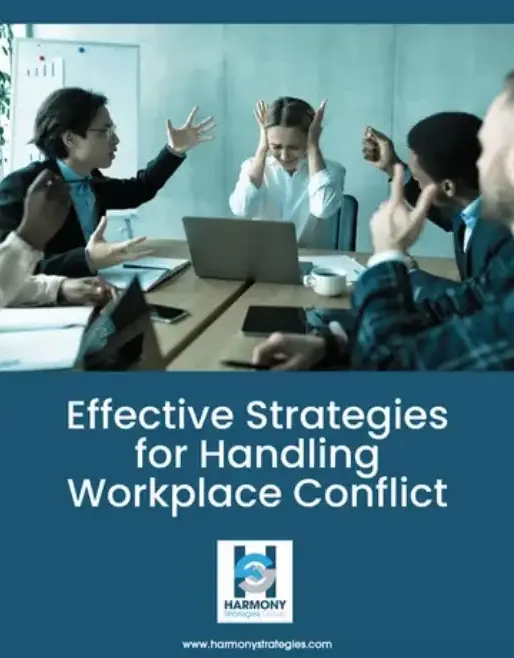
Wondering how to de-escalate conflict in the new year?
As organizations move into 2026, it is vital for HR, Leadership, and C-Suite Executives to prioritize workplace conflict as a defining leadership challenge. Hybrid work, generational shifts, social polarization, and rising stress levels have fundamentally changed how people relate to one another at work, and incivility is on the rise and crippling productivity. Leaders who understand how to navigate conflict thoughtfully will not only protect morale and retention, but also unlock creativity, trust, and long-term performance.
Conflict itself is not the problem. How leaders respond to it is.
—————————————————————————————-
Book a Conflict De-Escalation Coaching Session.
—————————————————————————————-
Why Conflict De-Escalation Is a Leadership Imperative
Workplace conflict often stems from misaligned expectations, communication breakdowns, power dynamics, or values-based disagreements. Left unaddressed, these tensions quietly erode trust, innovation, and productivity. Research consistently shows that unresolved conflict contributes to burnout, disengagement, and turnover.
However, when conflict is addressed constructively, it actually strengthens relationships and improves organizational outcomes. Teams that normalize healthy disagreement consistently outperform those who avoid it. Effective conflict resolution is not silence and tacit agreement — it is about creating conditions for honest, respectful dialogue to move forward and grow.
The Role of Leadership in Conflict De-Escalation
Leadership behavior sets the tone for how conflict is handled across an organization. Leaders who avoid difficult conversations signal that problems must stay hidden. Conversely, leaders who model curiosity, accountability, and emotional intelligence create cultures where issues are addressed early and productively.
The Society for Human Resource Management (SHRM, www.shrm.org) emphasizes that proactive conflict management is a core leadership competency, not a reactive HR function. Their research highlights that organizations with clear communication norms, conflict training, and defined escalation pathways experience higher engagement and lower attrition.
Similarly, the HR Certification Institute (HRCI, www.hrci.org) identifies conflict management as a foundational leadership skill across certification programs, particularly as organizations navigate change, restructuring, and generational shifts in the workforce. Their learning pathways emphasize communication, mediation, and adaptive leadership as essential competencies for today’s professionals.
—————————————————————————————-
How does a Leader learn Conflict De-Escalation? Email to book a workshop.
—————————————————————————————-
Moving Beyond Conflict Avoidance: A Cultural Shift
One of the most common mistakes organizations make is confusing harmony with silence. True harmony is not quiet – it’s disparate voices who move together in synchrony. High-functioning teams understand that disagreement, when handled well, strengthens decision-making and trust.
At Harmony Strategies, we see this pattern repeatedly across sectors. Leaders often come to us when conflict has already escalated — yet with the right tools, those same tensions can become turning points for growth. Our work focuses on building conflict competence, not conflict avoidance.
Through facilitated dialogue, mediation, leadership coaching, and training programs, Harmony Strategies helps organizations shift from reactive crisis management to proactive culture-building. You can explore our full range of services and workplace solutions at
https://harmonystrategies.com/workplace/
What Effective Conflict De-Escalation Looks Like in Practice
Organizations that handle conflict well share several key characteristics:
They prioritize clear communication norms and expectations.
They invest in leadership development that includes coaching and training for emotional intelligence and self-awareness.
They provide neutral spaces—such as mediation or ombuds services—where concerns can be raised privately and respectfully.
They treat conflict as data, not disruption, using it to identify systemic issues and improve processes.
Organizations who employ these approaches and roles build and support a culture of respectful disagreement and have better decision-making outcomes. And this conflict competence is also a major predictor of long-term organizational resilience.
Preparing for 2026: From Reaction to Readiness
As workplaces become more complex, the amount of workplace conflict will likely increase — but organizations can become better equipped to navigate it and handle it well. Preparing for 2026 means investing in skills that support clarity, accountability, and human-centered leadership.
This includes training managers to recognize early warning signs of conflict, equipping teams with shared language and tools for addressing tension, and embedding conflict resolution into leadership development frameworks. It also means viewing conflict not as a disruption, but as an opportunity for learning and alignment.
Harmony Strategies supports organizations in building these capabilities through customized workshops, mediation services, and leadership development programs designed for today’s evolving workplace.
To learn more about our approach and access additional resources, visit:
👉 https://harmonystrategies.com/solutions
👉 https://harmonystrategies.com/3D-harmony
Final Thought
Workplace conflict is inevitable — but dysfunction is not. Organizations that invest in conflict competence today are building the resilience, trust, and adaptability required for tomorrow. As 2026 approaches, the most effective leaders will be those who don’t shy away from conflict, but instead know how to navigate it with clarity, courage, and care.
If you’re ready to transform how your organization approaches conflict, the work begins now: Schedule a call today.