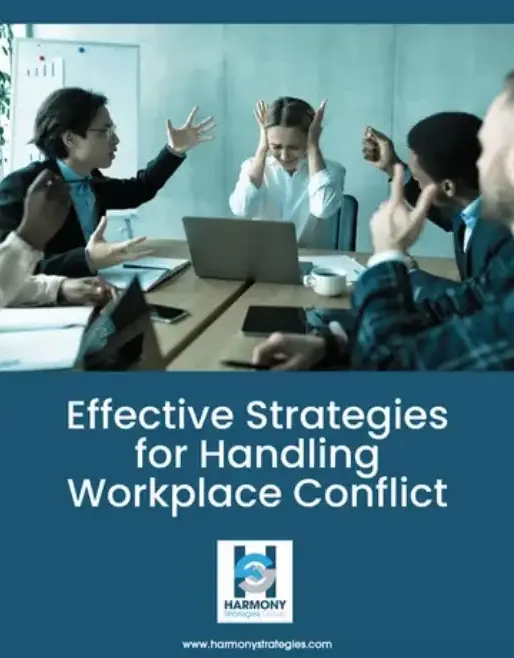
Most organizations don’t think about a conflict management system until conflicts become impossible to ignore.
A tense meeting spirals into silence. A valued employee resigns unexpectedly. A quiet team stops collaborating completely.
At that point, leaders scramble. They try to mediate the dispute, smooth things over, and move on. They act as firefighters, rushing to the scene of the blaze. But here is the hard truth: if your organization only addresses conflict after it erupts, you don’t have the right conflict skills or conflict strategy—you have a conflict reaction.
In 2026, that distinction matters more than ever.
If I asked to see your sales strategy for Q1, you would likely pull up a slide deck or a 12-month roadmap. You have a plan for revenue, for marketing, and for IT. But effective leadership requires asking: Do we have a plan for friction?
The High Cost of Lacking a Conflict Management System
Conflict is inevitable wherever people work together. Differences in priorities, values, and lived experiences are part of organizational life—especially in diverse, high-pressure environments.
What separates resilient organizations from fragile ones is not whether conflict occurs, but how it is managed. Yet, many organizations remain stuck in Reaction Mode, characterized by:
- Waiting until conflict becomes disruptive or visible.
- Treating each incident as an isolated “drama” rather than a systemic symptom.
- Relying on individual managers’ comfort levels to “handle it.”
- Defaulting to HR or legal processes too early, prioritizing containment over repair.
This approach is expensive. Research consistently shows that employees spend up to 2.8 hours per week dealing with conflict—time diverted from meaningful work (CPP Global, 2008). Furthermore, poorly managed conflict is a primary driver of burnout and turnover, particularly among high performers (Harvard Business Review).
When we treat conflict as a surprise to be extinguished, we miss the opportunity to learn from it. As conflict scholar Mary Parker Follett famously argued, “Conflict is not a failure of leadership—but mismanaging it is.”
Moving from Firefighting to Architecture
Having conflict skills or strategy is not a single policy or a one-off workshop. It is a deliberate, system-wide approach. It moves leadership from being Firefighters (emergency response) to being Architects (system design).
Organizations with embedded conflict skills and strategy don’t ask, “How do we stop conflict?” They ask, “How do we work with conflict intelligently, fairly, and constructively?”
This aligns with research from the Harvard Program on Negotiation, which emphasizes that conflict competence requires structures, not just skills. It requires systems that support negotiation, dialogue, and resolution at multiple levels.
3 Signs You Are Lacking a Conflict Management System
How do you know if your organization lacks a strategy? Look for these three common symptoms:
- The “Meeting After the Meeting.” This is the hallmark of artificial peace. In the official meeting, everyone nods. But the real meeting happens five minutes later in the hallway or on Slack, where people vent their true disagreements. This “shadow process” erodes trust and ensures that decisions made in the room never actually get implemented.
- The “Missing Middle.” In reactive cultures, conflict has two settings: Zero (silence) or One Hundred (explosion/lawsuit). There is no “middle ground” for healthy debate. Employees sit on frustrations for months until they suddenly resign. An organization that has strong conflict skills embedded within its systems builds that middle ground—low-stakes channels for feedback (like an Ombuds office) that prevent the explosion.
- The “Hero Leader” If the only way a dispute gets resolved is when a senior leader steps in to fix it, you don’t have a system; you have a dependency. A resilient organization equips teams with the frameworks to resolve their own tensions, freeing leadership to focus on strategy.
How to Build a Conflict Strategy and Embed Conflict Skills into the Organization: The 3D Harmony™ Approach
Moving from reaction to strategy requires a shift in infrastructure. At Harmony Strategies Group, we help organizations design these systems using our 3D Framework:
- DIGNITY: Normalize Early Dialogue
Teams perform better when people feel safe to raise concerns early—before stakes rise and positions harden.
The Strategy: Empower your team with strategies and skills to be both courageous and kind. Make it a norm that valid disagreement is not insubordination; it is a requirement for innovation.
- DIALOGUE: Provide Multiple Pathways
One-size-fits-all approaches don’t work. Effective conflict strategies include a menu of options beyond just “telling your boss” or “going to HR.”
The Strategy: Implement Ombuds services, conflict coaching, and facilitated dialogue channels. The presence of an organizational ombuds demonstrably reduces escalation by offering a confidential, informal off-ramp for disputes.
- DISCOVERY: Treat Conflict as Data, Not Drama
Patterns of conflict reveal where systems break down: unclear roles, misaligned incentives, or power imbalances.
The Strategy: Stop viewing conflict as “drama” between difficult personalities. Start viewing it as data. Analyze your conflict trends the same way you analyze financial risk. If the same team has the same fight every quarter, the issue isn’t the people—it’s the process.
A Question for 2026
We move further into 2026, every leadership team should reflect on this question:
When conflict arises in our organization, do we rely on individual heroics—or on intentional systems?
If the answer leans toward reaction, the good news is this: Conflict strategy can be designed, learned, and strengthened.
At Harmony Strategies Group, we help organizations move beyond reaction toward Strategic Harmony—designing conflict management systems that reduce risk, support dignity, and transform tension into insight.
Contact Harmony Strategies Group to explore how to create a conflict strategy. Or book an assessment with Kira to test your communication and conflict competencies.
References & Resources
CPP Global. (2008). Workplace Conflict and How Businesses Can Harness It to Thrive.
Edmondson, A. C. (2019). The Fearless Organization: Creating Psychological Safety in the Workplace. Wiley.
Harvard Business Review. (2022). How to Navigate Conflict with a CoWorker.
Program on Negotiation at Harvard Law School. (n.d.). Conflict Resolution Strategies.
Ury, W., Brett, J. M., & Goldberg, S. B. (1988). Getting Disputes Resolved: Designing Systems to Cut the Costs of Conflict. Jossey-Bass.